




JOYCE’S GROWTH STORY
A Blind Spot in the Fight Against Cancer
Every year, nearly one million Africans hear the words: “You have cancer.” By 2040, that number is expected to almost double. Yet despite carrying one of the world’s fastest-growing cancer burdens, Africa remains largely underrepresented in the data that shapes modern medicine.
Cancer genomics literature shows that African populations account for less than 1% of published cancer genomic datasets in some analyses, despite the continent’s high and rising disease burden. This imbalance has profound consequences: diagnostic tools, risk models, and targeted therapies are often built on genetic data that does not reflect African diversity. It is one of the most persistent inequities in global healthcare, and one that Joyce Ngoi has dedicated her work to addressing.
- 1 million Africans receive a cancer diagnosis each year, a number expected to almost double by 2040.
- <1% Share of published cancer genomic datasets drawn from African populations in some analyses, despite the continent’s rising cancer burden. them.
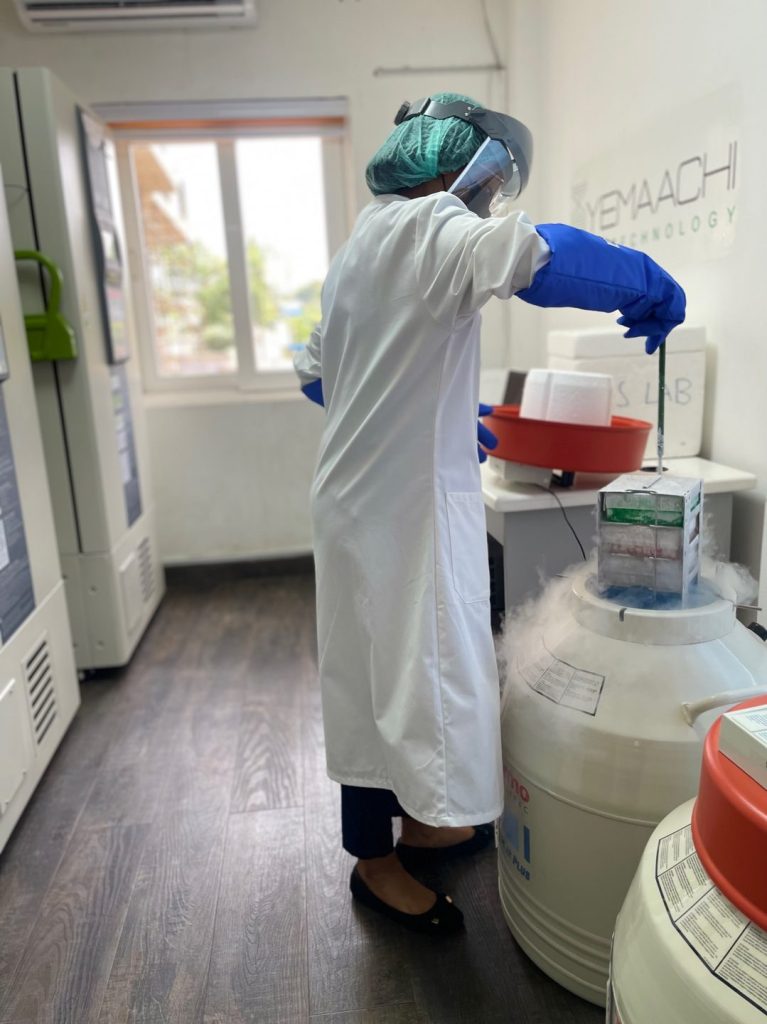
As Co-Founder and Head of Technical Services at Yemaachi Biotechnology, a Ghana- and Kenya-based biotechnology company advancing precision medicine for people of African descent, Joyce is helping build one of the most ambitious cancer genomics initiatives on the continent. Her work sits at the intersection of genomics and precision oncology, focused on a central challenge: cancer in Africa remains biologically under-characterised, limiting the effectiveness of diagnostics and treatments designed without African genetic representation.
THE BIGGER PICTURE
Closing Africa’s Genomic Gap
Today, her work contributes to addressing one of the most critical gaps in global cancer research: the underrepresentation of African genomes in biomedical science. This absence limits the accuracy of molecular diagnostics and reduces the effectiveness of precision oncology approaches for African patients. It also means that many cancers prevalent on the continent, such as breast, cervical, prostate, and liver cancer, remain understudied at a molecular level in African populations.
Her work aligns with emerging continental initiatives such as the African Cancer Atlas and H3Africa, which aim to build large-scale African-led clinico-genomic databases to improve diagnosis, treatment, and research outcomes. These efforts are designed to ensure that African genetic diversity is properly captured and translated into clinically relevant cancer insights.
The urgency of this work is underscored by Africa’s cancer landscape. The continent continues to experience rising incidence rates alongside disproportionately high late-stage diagnoses and lower survival outcomes compared to high-income regions. While precision oncology has transformed cancer care elsewhere, African populations have not benefited equally due to limited representation in genomic research and clinical trials.
THE NEXT GENERATION
Widening the Path for Women in Science
Beyond her scientific contribution, Joyce is also part of a broader transformation in African STEM leadership, particularly for women in science. Across the continent, women remain underrepresented in advanced fields such as genomics and computational biology. Her presence in this space challenges long-standing structural barriers while expanding pathways for the next generation of scientists.
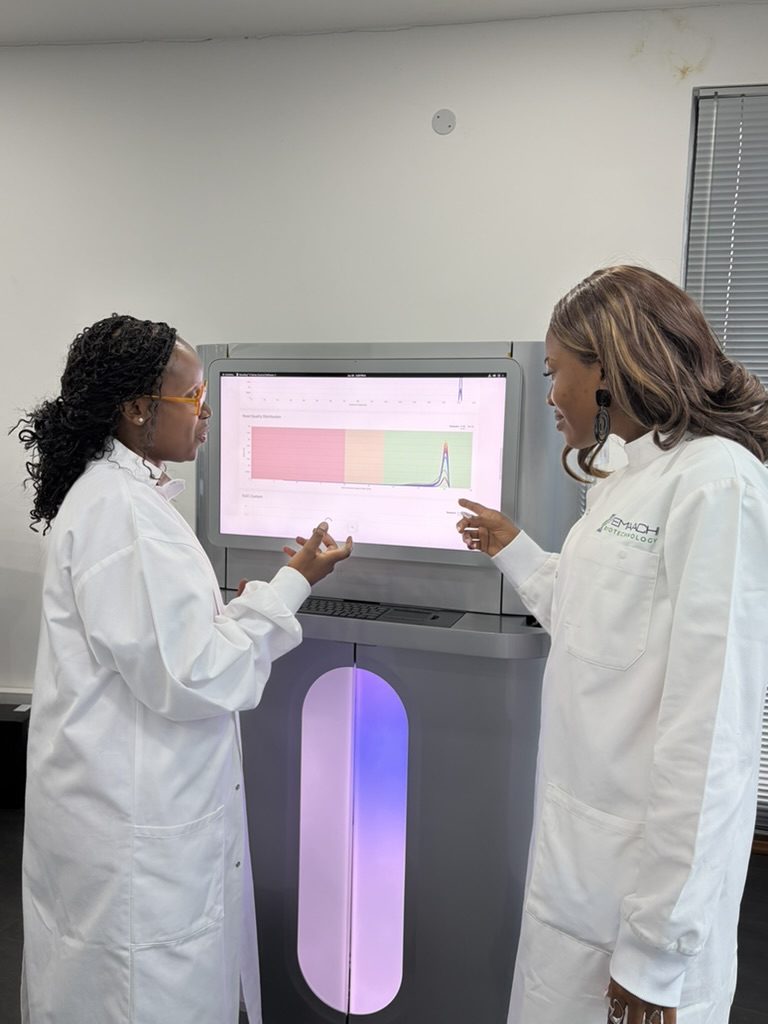
Joyce works alongside younger colleagues in the Yemaachi lab. Representation in genomics research starts with who gets to do the science. Alt text: Three women scientists in white lab coats at a laboratory instrument, one holding a rack of sample tubes.
She reflects on her early career years, when mentorship and exposure opportunities were limited for young African women entering biotechnology. Even today, she notes, access to research opportunities and guidance remains uneven. This reality has shaped her commitment not only to science, but to building ecosystems where others can thrive.
Her transformation story is therefore both personal and systemic. It reflects a wider shift in African science. External datasets are giving way to locally generated genomic knowledge. Fragmented research efforts are being replaced by coordinated continental collaboration. And a field long marked by underrepresentation is beginning to produce its own scientific leadership.
When asked what advice she would give young women considering careers in science, technology, and entrepreneurship, Joyce’s answer is immediate:
Passion and persistence. Passion is what keeps you moving when the work becomes difficult. Persistence is what helps you keep knocking on doors until one finally opens.

Joyce Ngoi, Co-Founder & Head of Technical Services, Yemaachi Biotechnology
A Continent Rewriting Its Own Science
In the years ahead, Joyce’s work represents more than scientific advancement. It signals a structural shift in how Africa positions itself within global biomedical innovation. As genomic infrastructure strengthens and African-led research continues to expand, her contribution will sit within a broader legacy of scientists who moved beyond documenting gaps in knowledge to actively closing them. In that sense, the story of her work is also the story of a continent redefining who generates science, who benefits from it, and how knowledge itself is built.
This story is part of the Africa Growth Stories series, highlighting the impact of the Mastercard Foundation Africa Growth Fund on young people across Africa.

